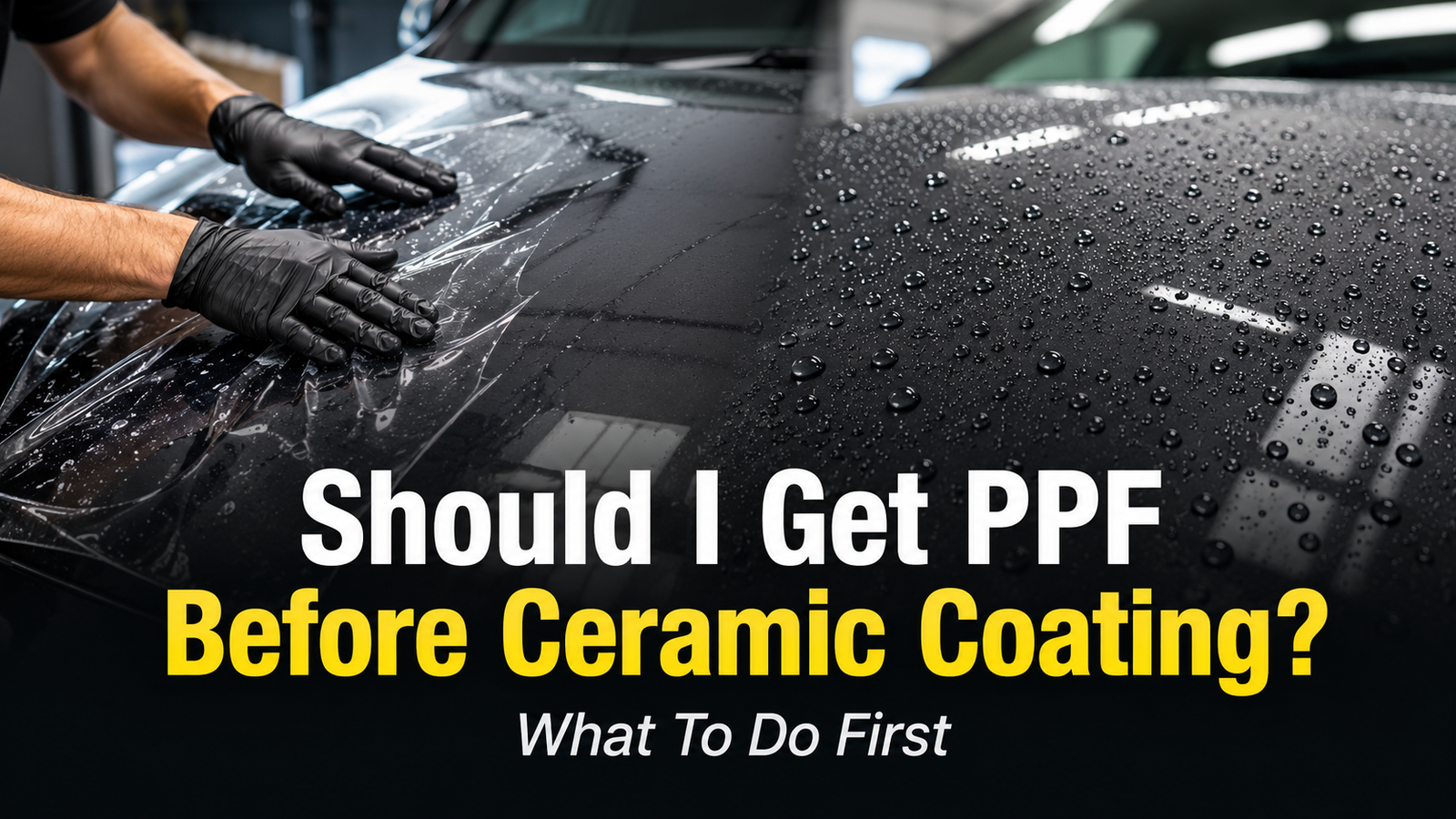
TLDR
- Yes, in most cases, you should get PPF before ceramic coating.
- PPF protects against rock chips, road debris and physical damage. Ceramic coating helps with gloss, water beading, easier washing and environmental contaminants.
- The usual best order is: paint correction, PPF installation, then ceramic coating over the paint and PPF.
- If your car is already ceramic coated, a good installer may need to remove the coating from the areas receiving PPF so the film can bond properly.
- You do not always need both. PPF matters most for impact protection. Ceramic coating matters most for easier maintenance.
Should I Get PPF Before Ceramic Coating?
If you are asking, “Should I get PPF before ceramic coating?” the answer is usually yes. PPF should generally go on first, then ceramic coating should be applied over the paint and film after the installer has followed the correct timing for the products being used.
That order matters because PPF, short for paint protection film, is an adhesive film. It needs a clean, properly prepared surface so it can bond to the paint. Ceramic coating is designed to create a slick, hydrophobic protective layer. That slickness is exactly why it can create problems if you try to install PPF over it later.
The short version is simple: film first, coating second.
PPF is the shield. Ceramic coating is the easier-to-clean top layer. They can work well together, but they do different jobs.
What PPF Actually Does
PPF is a clear or tinted urethane film installed over painted panels. You may also hear it called clear bra. Its main job is to absorb physical damage before that damage reaches the paint.
That makes PPF useful for:
- rock chips
- road debris
- sand and gravel
- bug splatter
- door cups and door edges
- rocker panels
- front bumper damage
- light scratches and scuffs
Most owners do not need full-body PPF. The common practical setup is full-front PPF, which usually covers the bumper, hood, front fenders and mirrors. Some people also add rocker panels, door cups, door edges or the rear luggage area.
PPF is especially useful on new cars, expensive vehicles, dark paint, soft paint or vehicles driven on highways. If you have ever washed a car and found three new white dots on the front bumper, that is the problem PPF is trying to solve.
What Ceramic Coating Actually Does
Ceramic coating is a liquid coating that bonds to the surface and creates a durable protective layer. It is not a thick impact barrier like PPF. It will not stop a rock from chipping the paint.
Ceramic coating is useful for:
- water beading
- easier washing
- added gloss
- chemical resistance
- UV and environmental protection
- bird droppings, bug residue and road grime cleanup
- keeping PPF easier to maintain
That last point is important. Ceramic coating over PPF can make the film easier to clean and help reduce staining. It can also create a more consistent finish across painted and filmed panels.
But ceramic coating should not be treated as a replacement for PPF. A coating can help protect against what lands on the car. PPF helps protect against what hits the car.
The Best Installation Order
The best order is usually:
- Wash and decontaminate the vehicle
- Correct the paint if needed
- Install PPF on the chosen panels
- Let the film settle according to product and installer guidance
- Apply ceramic coating over the paint and compatible PPF
Paint correction comes before both products because PPF and ceramic coating can lock in the appearance of the surface underneath. If the paint has swirls, haze, water spots or light scratches, a detailer may recommend correcting those issues first.
Then the PPF goes on. Once the film is installed correctly and ready for coating, the ceramic coating can be applied over the remaining paint and, when compatible, over the PPF itself.
Timing depends on the film, coating system and installer. Some products can be coated fairly soon after installation. Other manufacturer guidance may recommend waiting longer. The safe move is to follow the film and coating manufacturer’s instructions, not a random rule from a forum.
Why PPF Before Ceramic Coating Is Usually Better
PPF needs adhesion. Ceramic coating creates slickness. That is the core issue.
If ceramic coating goes on first, the PPF installer may have to polish or chemically strip the coating from the areas where the film will be installed. That adds labor and can waste part of the coating you already paid for.
There is also a practical fit issue. PPF installation involves slip solutions, stretching, positioning and edge finishing. A clean prepared painted surface gives the installer a better starting point.
This does not mean PPF over ceramic coating is impossible in every case. Some installers can prep the surface and make it work. But it is usually not the ideal order if you are planning both from the beginning.
Do You Need Ceramic Coating If You Already Have PPF?
No, you do not need ceramic coating if you already have PPF. PPF can protect the paint on its own.
But ceramic coating can still be worth adding over PPF if you care about maintenance. PPF can collect dirt, bug residue and road film just like paint does. A compatible ceramic coating can make the surface easier to wash and help water bead off the vehicle.
The main benefit is convenience, not extra rock chip protection. Ceramic coating over PPF will not suddenly make the film much thicker or impact-proof. It just helps the surface stay cleaner and easier to maintain.
Decision Guide: Which Setup Makes Sense?
Here is the easiest way to choose.
| Situation | Best Option |
|---|---|
| You want the best protection against rock chips | PPF first, then ceramic coating if budget allows |
| You mostly want easier washing and gloss | Ceramic coating may be enough |
| You have a new car and plan to keep it clean long term | Paint correction, PPF on high-impact areas, ceramic coating over everything |
| Your car is already ceramic coated | Ask the installer if the coating must be removed where PPF will go |
| You drive a lot of highway miles | Prioritize PPF on the front end |
| You are on a tighter budget | Full-front or partial-front PPF before full-car coating |
| You have matte or satin paint | Use matte-compatible film and coating, and ask for samples when possible |
For most daily drivers, full-front PPF plus ceramic coating is the strong “do it right once” setup. It protects the most vulnerable areas from chips while making the rest of the car easier to clean.
If the budget does not allow both, start with the thing that solves your biggest problem. If rock chips bother you, start with PPF. If washing and gloss matter more, ceramic coating may be enough.
What If Your Car Is Already Ceramic Coated?
If the ceramic coating is already on the car, do not panic. You may still be able to install PPF.
But you should tell the installer exactly what coating was used, when it was installed and what maintenance products have been applied since. The installer may need to polish the coating off the panels that will receive PPF. In some cases, they may do a test area first to check adhesion.
This may also affect your ceramic coating warranty or maintenance plan, especially if the original installer applied the coating and another shop is now prepping the surface. It is worth asking before work begins.
The main thing to avoid is pretending the coating is not there. PPF installation works best when the surface prep is honest and thorough.
What Areas Should Get PPF Before Coating?
The front bumper is usually the first priority. It takes direct hits from road debris and bugs. The hood, front fenders and side mirrors are close behind.
A strong practical package includes:
- front bumper
- full hood
- full front fenders
- side mirrors
- door cups
- door edges
- rocker panels
You can then apply ceramic coating over the entire vehicle, including the PPF if the coating is compatible. This creates a more consistent cleaning experience across the car.
Full-body PPF is the higher-end option. It makes sense for very expensive vehicles, collector cars, soft paint, track use or owners who really do not want exposed paint. It is not necessary for everyone.
Common Mistakes To Avoid
The first mistake is coating the car before deciding whether you want PPF. If you are even considering PPF, make that decision first.
The second mistake is assuming ceramic coating protects like PPF. It does not. Ceramic coating can help with maintenance and contaminants, but rocks can still chip coated paint.
The third mistake is skipping paint prep. PPF and ceramic coating both look better over clean, corrected paint. You do not need concours-level perfection for every daily driver, but obvious swirls, water spots and sanding marks should be handled before protection goes on.
The fourth mistake is using the wrong coating on film. PPF is flexible. Some coatings are made specifically for paint and PPF, while others may not be ideal for flexible film. Use a product the installer knows is compatible.
The Bottom Line
Get PPF before ceramic coating if you are planning to use both. That order gives the film the clean surface it needs, then lets the ceramic coating add gloss, water beading and easier maintenance on top.
PPF is the right choice for physical damage. Ceramic coating is the right choice for easier cleaning and surface protection. Together, they can make a lot of sense, especially on a new car or a vehicle you care about keeping clean.
But the order matters. Choose your PPF coverage first, install it correctly, then coat the paint and compatible film according to the product instructions.
FAQs
Should I Get PPF Before Ceramic Coating?
Yes, in most cases you should get PPF before ceramic coating. PPF needs to bond directly to clean, prepared paint. Ceramic coating is usually applied after PPF so it can protect both the exposed paint and the film surface.
Can Ceramic Coating Go Over PPF?
Yes, many ceramic coatings can be applied over PPF, but the coating should be compatible with film. Some coatings are specifically designed for paint and PPF. Always follow the manufacturer’s guidance and installer recommendations.
Can PPF Go Over Ceramic Coating?
Sometimes, but it is not the preferred order. The coating may need to be removed from the areas receiving PPF so the film adhesive can bond properly. Ask the installer before assuming it will work.
How Long Should I Wait To Ceramic Coat After PPF?
It depends on the film and coating system. Some installers coat PPF soon after installation. Some manufacturer guidance recommends a longer wait for specific films and coatings. The safest answer is to follow the product instructions for the exact film and coating being used.
Is PPF Worth It If I Already Have Ceramic Coating?
PPF can still be worth it if you want rock chip protection. Ceramic coating does not replace PPF for physical impact. If your front bumper, hood or rocker panels are getting chipped, PPF solves a different problem than coating.
Is Ceramic Coating Worth It If I Already Have PPF?
It can be. Ceramic coating over PPF can make the film easier to clean and improve water beading. It is not required, but it is useful if you want lower-maintenance protection.
Should I Ceramic Coat The Whole Car Or Only The PPF?
Most owners who do both coat the whole car, including the PPF if compatible. That gives the vehicle a more consistent finish and makes washing easier across painted and filmed areas.