TLDR
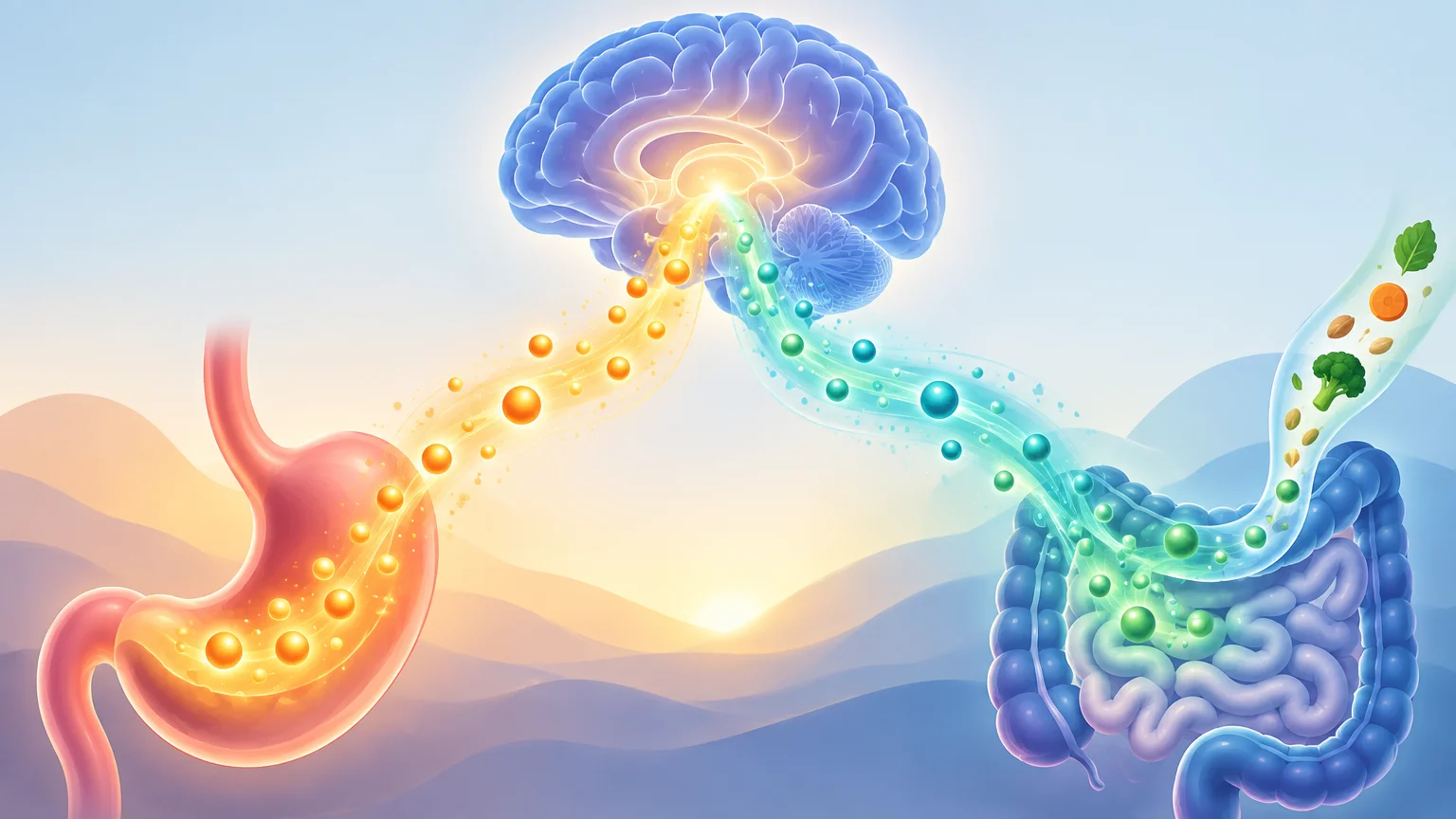
In a ghrelin vs GLP-1 comparison, ghrelin is generally associated with meal initiation and increased motivation to eat, while GLP-1 contributes to meal-related insulin secretion, gastrointestinal regulation, satiation, and satiety. They are not simple opposites. Both participate in a larger system involving other gut hormones, brain circuits, nutrient sensing, learned behavior, sleep, stress, food availability, and energy needs. GLP-1 receptor agonist medicines are also not the same thing as the short-lived GLP-1 naturally released after a meal.
Calling ghrelin the “hunger hormone” and GLP-1 the “fullness hormone” is useful only as a first approximation. The labels capture part of their physiology, but they hide important differences in where the hormones come from, when they are released, which receptors they activate, and how strongly their effects depend on context.
Ghrelin vs GLP-1 at a glance
| Feature | Ghrelin | GLP-1 |
|---|---|---|
| Main source | Produced mainly by cells in the stomach, although other tissues can contribute | Released mainly from intestinal enteroendocrine cells in response to nutrients |
| Typical appetite association | Often promotes hunger and food-seeking | Often supports satiation and satiety |
| Common meal pattern | Frequently rises before anticipated meals and falls after eating | Generally increases after nutrients reach and stimulate the gut |
| Major metabolic roles | Links nutritional state with appetite, growth-hormone signaling, and other physiological systems | Enhances glucose-dependent insulin secretion, influences glucagon, slows gastrointestinal activity in some contexts, and signals through gut-brain pathways |
| Relationship to medicines | Ghrelin-targeted obesity treatment is not established | The GLP-1 receptor is targeted by several prescription medicines |
| Simple interpretation | A hunger-related signal, not an on/off switch for eating | A meal-responsive metabolic and satiety-related signal, not a complete controller of fullness |
This comparison describes broad physiological patterns. Hormone concentrations and responses vary with meal composition, timing, energy balance, body composition, health status, and the method used to measure them. Appetite regulation involves numerous peptides and interacting physiological processes, not a two-hormone contest.
What ghrelin actually is
Ghrelin is a peptide hormone best known for signaling nutritional state and promoting appetite. The landmark discovery paper identified it as a 28-amino-acid, chemically modified peptide isolated from stomach tissue that activates the growth-hormone secretagogue receptor. Readers interested in the original biochemical finding can view the ghrelin discovery paper on PubMed.
Ghrelin often increases before an expected meal and decreases after food is consumed. That pattern helps explain its association with meal initiation, but it does not mean a ghrelin surge mechanically forces someone to eat. Anticipated meal timing, habitual schedules, sensory cues, energy restriction, sleep, stress, and the availability and reward value of food can all influence eating behavior alongside hormonal signals.
Ghrelin also has functions beyond hunger. Its receptor biology connects appetite with growth-hormone secretion and broader energy-regulation pathways. Reviews therefore describe ghrelin as a hunger-related and appetite-stimulating signal rather than a single-purpose appetite switch. Attempts to turn ghrelin biology into an established obesity therapy have remained uncertain, so a plausible target should not be confused with a proven treatment.
What GLP-1 does after a meal
Glucagon-like peptide-1, or GLP-1, is a peptide hormone released from specialized intestinal cells as nutrients are detected. It is an incretin, meaning that it helps amplify insulin secretion in response to glucose when glucose is elevated. This contributes to coordinating incoming nutrients with blood-glucose regulation.
GLP-1 also participates in communication among the intestine, pancreas, brain, and nervous system. Depending on the experimental or clinical context, its actions can include reducing glucagon secretion, influencing gastrointestinal movement, supporting earlier meal termination, and extending fullness after eating. Reviews place it among several appetite-suppressing gut peptides rather than treating it as the sole physiological source of satiety.
Two useful eating terms are easy to confuse. Satiation is the process that brings an ongoing meal to an end; satiety is the reduced motivation to begin another meal during the period afterward. GLP-1-related signaling may contribute to both, but neither experience is produced by GLP-1 alone.
What happens around meals
A simplified meal sequence might look like this: ghrelin rises as an anticipated eating time approaches, sensory and cognitive cues increase interest in food, and eating begins. As nutrients enter the stomach and intestine, gastric stretch, nutrient sensing, GLP-1, cholecystokinin, peptide YY, insulin, and neural signals collectively update the brain about the meal. Ghrelin commonly declines while several satiation-related signals increase.
The sequence is not a clean handoff from one hormone to another. The brain integrates current signals with previous experience, circadian timing, food reward, social context, and the body's longer-term energy state. Someone can therefore feel interested in highly rewarding food despite having recently eaten, or feel limited appetite even when a clock-based meal is due.
This distinction matters for understanding body weight. Appetite affects energy intake, but intake is only one side of the body's energy-balance system. Energy expenditure, physical activity, body size, lean mass, nutrient absorption, and adaptive responses also influence weight over time. A change in hunger does not translate into a fixed or perfectly predictable change in body weight.
Does GLP-1 lower ghrelin?
There is evidence that GLP-1 can affect ghrelin under specific experimental conditions, but the broad claim that GLP-1 simply “switches off” ghrelin goes too far. In an acute randomized study involving 14 healthy men, an intravenous GLP-1 infusion was associated with lower ghrelin levels later after a meal. The investigators proposed increased insulin secretion as a possible mediator.
That result needs boundaries. The study was small, involved only men, examined an acute response, and used intravenous GLP-1 exposure above ordinary physiological conditions. It does not establish that long-term GLP-1 receptor agonist treatment consistently suppresses ghrelin in every patient. Nor does it show that ghrelin suppression is the central reason those medicines affect appetite or body weight.
Other experimental human studies have examined how GLP-1 affects gastric emptying, glucagon, appetite, and food intake. These infusion experiments can reveal biological pathways, but their results cannot automatically be transferred to every medicine, treatment duration, or patient population.
Native GLP-1 is not the same as a GLP-1 medicine
Native GLP-1 is released after eating and is broken down rapidly. GLP-1 receptor agonists are pharmaceutical compounds designed to activate the same receptor while producing exposure that lasts much longer than an ordinary post-meal GLP-1 pulse. Depending on the product, their molecular structures, approved indications, administration schedules, safety information, and pharmacological profiles differ.
This means a medication study cannot be treated as a pure experiment on native GLP-1 physiology. It shows what a particular drug did in a defined population under a particular protocol. It does not prove that naturally released GLP-1 produces an effect of the same size or duration. It also does not mean a medicine works by directly blocking ghrelin.
The distinction among hormones, receptors, and drug products also prevents confusion when comparing single- and multi-receptor medicines. A separate explanation of GLP terminology and receptor-targeting drugs examines why a hormone name, receptor target, and brand name should not be used interchangeably.
What a semaglutide appetite study found
A double-blind trial involving 72 adults with obesity compared 20 weeks of semaglutide treatment with placebo. At the study assessment, the semaglutide group had lower freely chosen energy intake, lower reported hunger and anticipated food consumption, and higher fullness and satiety ratings.
Those findings support an appetite-related effect of that semaglutide regimen in that population. They do not establish that all GLP-1 signaling has an identical effect, that every person responds similarly, or that ghrelin suppression caused the observed changes.
The study also found no evidence of delayed gastric emptying at week 20 using its indirect paracetamol-absorption assessment. That result argues against treating delayed gastric emptying as the only explanation for the appetite findings in this trial. It does not prove that gastric emptying is never affected: the contribution may vary with the compound, treatment stage, population, and measurement method.
Why hunger and body weight cannot be reduced to two hormones
Ghrelin and GLP-1 belong to a network rather than a binary control system. Important participants include insulin, leptin, peptide YY, cholecystokinin, glucagon, amylin, vagal nerve signaling, brain reward circuits, gastric stretch, nutrient sensing, and signals related to stored energy.
This network helps explain several otherwise confusing experiences:
- Hunger may persist when energy intake has been restricted, even if some meal-related satiety signals remain active.
- A person may stop a meal because of gastrointestinal fullness without experiencing a lasting reduction in thoughts about food.
- Palatable food cues can increase the motivation to eat when the body does not have an urgent energy need.
- Weight loss can prompt adaptive changes in appetite and energy expenditure that make continued loss harder.
- The same meal or medicine can produce different appetite effects among individuals and at different times.
Hormones matter, but they do not erase environment, behavior, physiology, or individual variability. Likewise, describing weight change only as a hormone problem overlooks how appetite signals influence food intake within a broader energy system.
Bariatric surgery makes the physiology even more complex
Research after bariatric surgery has examined changes in ghrelin, GLP-1, peptide YY, bile-acid signaling, nutrient delivery, neural communication, insulin sensitivity, and eating behavior. Procedures that reroute or alter the gastrointestinal tract can change how quickly nutrients reach hormone-secreting intestinal regions. Reviews discuss altered gut-hormone patterns after Roux-en-Y gastric bypass, but they also emphasize multiple interacting controls.
It is therefore too simple to say bariatric surgery works because it “reduces ghrelin” or “raises GLP-1.” Hormonal responses can differ by procedure, measurement timing, meal composition, and individual physiology. Anatomical restriction, nutrient flow, learned eating patterns, adverse gastrointestinal consequences, and other metabolic adaptations may all contribute.
Can a hormone test explain one person's hunger?
A single ghrelin or GLP-1 measurement is not a standalone explanation for an individual's hunger or weight change. Concentrations can vary with fasting duration, recent food intake, sampling time, assay method, sleep, energy balance, and health status. More importantly, a blood concentration does not reveal how strongly receptors, nerves, and brain circuits are responding to that signal.
Persistent or unexpectedly changing appetite can also have many non-hormonal and medical explanations. A clinically useful assessment may need to consider eating patterns, medications, sleep, mood, gastrointestinal symptoms, glucose regulation, recent weight change, and other health factors rather than assigning the experience to one peptide.
Medication safety requires product-specific information
Hormone physiology is not a guide to selecting, combining, or using prescription medicines. The supplied 2025 FDA prescribing information identifies Wegovy as a GLP-1 receptor agonist and states that it should not be coadministered with another semaglutide-containing product or another GLP-1 receptor agonist. That statement applies to this product's labeling and should not be converted into a class-wide summary of every indication, contraindication, or warning.
Anyone evaluating a medicine needs the current label for the exact product and indication, along with guidance from an appropriate licensed clinician. Native hormones, approved medicines, compounded products, and research-use materials are not interchangeable merely because they share a molecule or receptor name.
Frequently asked questions
Is ghrelin bad for weight loss?
No hormone is inherently “bad.” Ghrelin has normal physiological roles, including communicating nutritional state and participating in growth-hormone regulation. It may contribute to increased hunger during energy restriction, but body-weight outcomes reflect the larger appetite and energy-balance system.
Is GLP-1 simply the opposite of ghrelin?
No. Their appetite associations often point in different directions, but their timing, receptors, tissue sources, and metabolic actions are not mirror images. GLP-1 has important glucose-regulatory actions, while ghrelin connects nutritional state with several other systems.
Do GLP-1 receptor agonists block ghrelin?
They activate the GLP-1 receptor; they are not ghrelin-receptor blockers. A small acute infusion study suggests GLP-1 can lower post-meal ghrelin under particular conditions, but the evidence does not establish ghrelin suppression as the main mechanism of GLP-1 receptor agonist medicines.
Does slower stomach emptying explain all GLP-1-related appetite effects?
No. Gastric emptying may contribute in some contexts, particularly at certain treatment stages, but it is not a complete explanation. In the 20-week semaglutide study, appetite and energy-intake differences were observed without evidence of delayed gastric emptying on the study's indirect assessment.
Why can someone still feel hungry after eating?
Meal size and composition, eating speed, sleep, stress, habitual meal timing, energy restriction, food cues, medications, and numerous physiological signals can all matter. Fullness from stomach distension and the motivation to eat are related but not identical experiences.
The practical takeaway
The most accurate ghrelin vs GLP-1 conclusion is that ghrelin commonly supports hunger and meal initiation, while GLP-1 helps coordinate nutrient intake with glucose regulation, satiation, and satiety. Their effects can interact, but neither hormone acts alone or fully explains eating behavior.
When interpreting a headline or study, first ask whether it concerns native hormone physiology, an acute laboratory infusion, an approved receptor agonist, or another investigational compound. Then check the population, duration, endpoint, and comparator. That framework is more informative than treating hunger as a contest between one hormone that says “eat” and another that says “stop.”
References
- Gut hormones and appetite regulation – PubMed
- Ghrelin, CCK, GLP-1, and PYY(3-36): Secretory Controls and Physiological Roles in Eating and Glycemia in Health, Obesity, and After RYGB – PubMed
- Ghrelin is a growth-hormone-releasing acylated peptide from stomach – PubMed
- Roles for ghrelin in the regulation of appetite and body weight – PubMed
- Glucagon-like peptide 1 (GLP-1) suppresses ghrelin levels in humans via increased insulin secretion – PubMed
- Do the actions of glucagon-like peptide-1 on gastric emptying, appetite, and food intake involve release of amylin in humans? – PubMed
- The effect of semaglutide 2.4 mg once weekly on energy intake, appetite, control of eating, and gastric emptying in adults with obesity – PubMed
- label